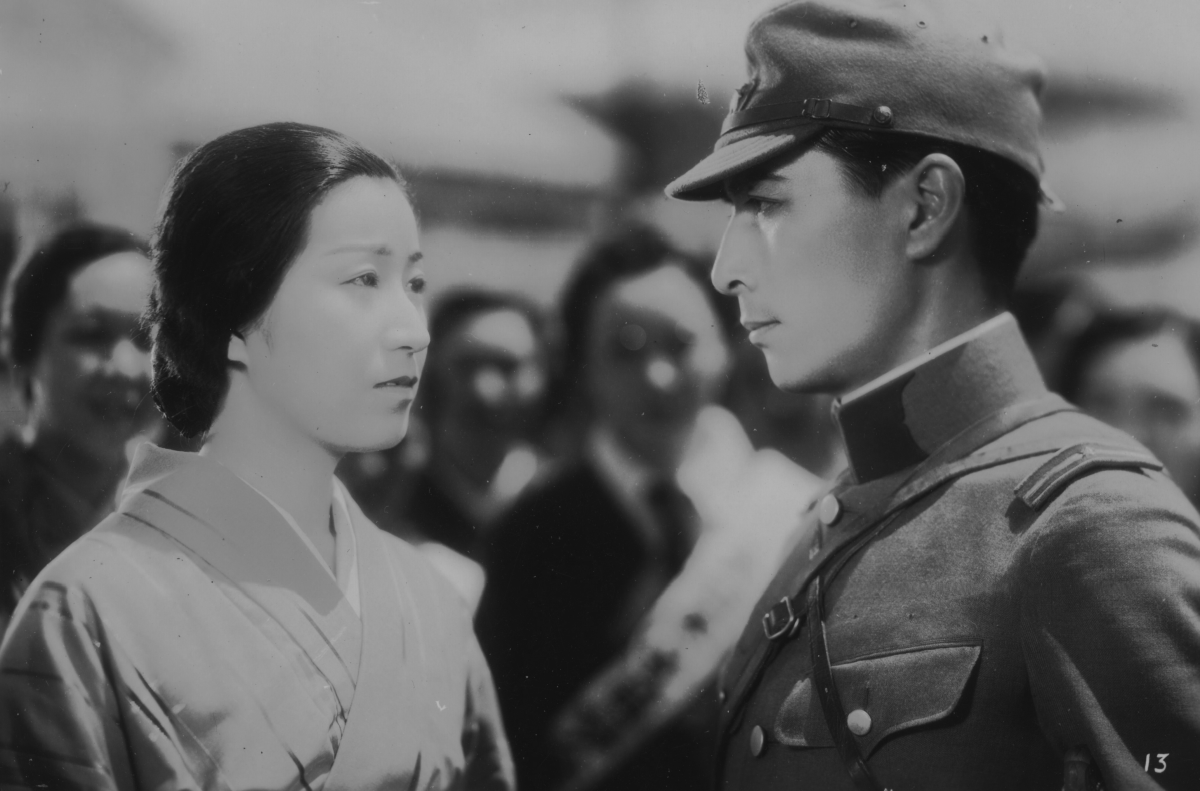
When the daughter of a poor family leapfrogs that of a rich one to be named top of the class, it exposes a series of hypocrisies and contradictions within the militarist order in Mikio Naruse’s 193…
May 8, 2025 • Subscribe
More like this

Passing Fancy (出来ごころ, Yasujiro Ozu, 1933)
A feckless widowed father faces twin crises when he falls for a young woman and his falls ill in Yasujiro Ozu’s depression-era drama.

Wife (妻, Mikio Naruse, 1953)
An unhappily married woman contemplates independence but struggles to see herself as anything other than a “wife” in Naruse’s bitter marital drama

Mikio Naruse: Adventures on Harumi Island
I got a pleasant surprise recently when I watched Mikio Naruse’s AUTUMN HAS ALREADY STARTED (1960). At a key point in the narrative, the two child protagonists living…


Repast (めし, Mikio Naruse, 1951)
An unhappily married woman fed up with the drudgery of her existence considers other options but finally concludes there are none in Naruse’s bleak melodrama

Lightning (稲妻, Mikio Naruse, 1952)
An aspirant young woman envisages a different life herself than the dissatisfactory marriages of her mother and sisters in one of Mikio Naruse’s more hopeful drama.

Flowing (流れる, Mikio Naruse, 1956)
The denizens of a moribund geisha house contemplate visions of independence in post-war Japan Mikio Naruse’s thriving ensemble drama.

Late Chrysanthemums (晩菊, Mikio Naruse, 1954)
Four former geishas struggle to find their place in a changing society in Miko Naruse’s melancholy melodrama.

Untamed (あらくれ, Mikio Naruse, 1957)
A rebellious woman strives for independence in a patriarchal society but nevertheless finds herself hamstrung by feckless men in Naruse’s Taisho-era drama

A Woman’s Place (女の座, Mikio Naruse, 1962)
The young women of post-war Japan struggle to define themselves in a changing society in Mikio Naruse’s uncharacteristically hopeful family drama

A Wife’s Heart (妻の心, Mikio Naruse, 1956)
When plans to start a new business go awry, a dejected wife finds herself at a crossroads in Mikio Naruse’s martial drama.

A Wanderer’s Notebook (放浪記, Mikio Naruse, 1962)
A determined young woman seeks a way out of poverty in Mikio Naruse’s biopic of author Fumiko Hayashi.

Mother (おかあさん, Mikio Naruse, 1952)
A teenage girl struggles to understand her self-sacrificing mother in Mikio Naruse’s subversive take on the hahamono

The Angry Street (怒りの街, Mikio Naruse, 1950)
A sociopathic student takes revenge on a changing society by seducing wealthy women in Mikio Naruse’s brooding noir.

Hit and Run (ひき逃げ, Mikio Naruse, 1966)
A grief-stricken mother hatches a desperate plan of revenge against the woman who killed her son in Mikio Naruse’s dark psychological drama.

Sound of the Mountain (山の音, Mikio Naruse, 1954)
A failed patriarch resolves to set his unhappily married daughter-in-free in Mikio Naruse’s post-war marital drama

Hiroshima (ひろしま, Hideo Sekigawa, 1953)
During the post-war occupation of Japan which lasted until 1952, the censorship regulations which replaced those of the militarist era perhaps ironically made it more or less impossible…

The Approach of Autumn (秋立ちぬ, Mikio Naruse, 1960)
A small boy finds himself trapped between the new society and the old in Mikio Naruse’s often deceptively cheerful childhood drama.

ご多忙かと存じます
The Language of Job Hunting - How to Japanese - August 2022

Five Men in a Circus (サーカス五人組, Mikio Naruse, 1935)
A 5-piece jinta brass band ends up performing as ringers at strike-stricken circus in Naruse’s melancholy anti-authoritarian comedy

Amalock (あまろっく, Kazuhiro Nakamura, 2024)
A resentful middle-aged woman’s perspective begins to change when her father suddenly marries a much younger woman in Kazuhiro Nakamura’s lighthearted dramedy.

A Far Shore (遠いところ, Masaaki Kudo, 2022)
A teenage mother struggles to make a life for herself in contemporary Okinawa in Masaaki Kudo’s bleak social drama.

Town Without Sea (夏、至るころ, Elaiza Ikeda, 2020)
Filled with adolescent anxiety, a lost young man begins to discover the confidence to fly far from home in Elaiza Ikeda’s beautifully drawn Kyushu coming-of-age tale

Angel’s Egg (天使のたまご, Mamoru Oshii, 1985)
A solitary girl and a nihilistic soldier find themselves on opposite sides of an ideological divide in Mamoru Oshii’s surrealist animation.

konna koto mo arou ka to こんなこともあろうかと
What konna koto mo arou ka to こんなこともあろうかと means in Japanese, with examples.

A Far Shore 遠いところ (2023) Director: Masaaki Kudo
A Far Shore 遠いところ (2023), by director Masaaki Kudo @kudomasaaki, is a topical and harrowing drama that depicts the fight for survival of a teen mother in an uncaring…


Manga Kodomo Bunko (まんがこども文庫) September ED (9月の歌) - Coral Reef (さんご礁)
Sung by (歌): Kumiko Ōsugi (大杉久美子) Lyrics (作詞): Tetsuzō Komura (古村徹三) Composition and Arrangement (作曲・編曲): Seiichirō Uno (宇野誠一郎) Very special thanks to PopKorn Kat for transferring and scanning this record!

The Phantom Goblin (まぼろし天狗, Nobuo Nakagawa, 1962)
Hashizo Okawa takes on dual roles as earnest brothers separated at birth determined to “clean out evil in Edo” in Nobuo Nakagawa’s jidaigeki drama
いろいろ December 2023
I ran out of space over at the newsletter this month, so I thought I’d share the いろいろ section on the blog instead. Podcast link at the bottom!…
Sonny Chiba (1939-2021)
Shinichi “Sonny” Chiba, who died yesterday from COVID-derived pneumonia, was one of Japan’s foremost action stars, with an influence extending way beyond his native country. Inspired as a…

Final Evangelion: Sincerity & Simulacrum
More than a year after release, aided in part due to my 2022 learned-nonchalance towards media consumption, I finally got around to watching Shin Evangelion Gekijōban 𝄇. I…

The Sincerity of Tokusatsu
I have watched a lot of anime, but it comes to tokusatsu stuff, I’m far less experienced. When Toei launched their official worldwide tokusatsu channel on Youtube a…

Is どこにありますか? more polite than どこですか? #learnjapanese
Learn Japanese with Me - https://bit.ly/4drmyU2

"Would it Be これがいりますか?" #learnjapanese
Learn Japanese with Me - https://bit.ly/4drmyU2


行こう ikou VS 行きましょう ikimashou #learnjapanese
Learn Japanese with Me - https://bit.ly/4drmyU2

Manga Kodomo Bunko (まんがこども文庫) April ED (4月の歌) - Chick (ひよこ)
Sung by (歌): Yoshiko Mari (真理ヨシコ) and the Suginami Junior Chorus (杉並児童合唱団) Lyrics (作詞): Akahiko Shimaki (島木赤彦) Composition and Arrangement (作曲・編曲): Akihiro Komori (小森昭宏) Very special thanks to PopKorn Kat for…
てへぺろ [Tehepero](๑≧౪≦)てへぺろ
Hi everyone. Oh no, I have left my blog for too long. I even forgot to write in English! Does anyone help me with my terrible English? My…


Hit Me Anyone One More Time (記憶にございません!, Koki Mitani, 2019)
Japan’s “all time worst” prime minister undergoes a change of heart after getting hit on the head with a rock in Koki Mitani’s lowkey political satire
Unsung Walter Lantz Cartoon: “Scrambled Eggs” (1939)
“Scrambled Eggs” (1939), produced by Walter Lantz for release by Universal Pictures, is a nine-minute Technicolor cartoon about a mischievous supernatural forest character named Peterkin who is drawn…

Jojo's, Yakuza And The Death Of Sincerity
Jojo's Bizarre Adventures is not bizarre, The Artist Formerly Known As Prince is a Vampire and Irony has killed art. Patreon:- https://www.patreon.com/graylink Media Mentioned:- Jojo's Bizarre Adventures, Yakuza 0, Shiki,…
Revisiting “Wonder Bakers at the World’ Fair” (1939)
Not quite the greatest thing since "sliced bread" - but close to it. A rare industrial film by Ted Eshbaugh.

Silent Naruse: STREET WITHOUT END (1934)
Last year I saw eleven films directed by Mikio Naruse, raising to 24 the number of films I’ve seen by him. So far this year I’ve seen two…

"行こう is Just Informal and 行きましょう is just formal" #learnjapanese
Learn Japanese with Me - https://bit.ly/4drmyU2

Manga Kodomo Bunko (まんがこども文庫) June ED (6月の歌) - Lullaby of the Rain (雨のこもりうた)
Sung by (歌): Naoko Watanabe (渡辺直子) Lyrics (作詞): Tomoko Koike (小池知子) Composition and Arrangement (作曲・編曲): Tokuhide Niimi (新実徳英) Very special thanks to PopKorn Kat for transferring and scanning this record!

"これいる? vs. これ欲しい?" #learnjapanese
Learn Japanese with Me - https://bit.ly/4drmyU2

Is This Heaven? (天国か、ここ?, Shinji Imaoka, 2023)
A middle-aged couple ponder loss and regret on a surreal odyssey into the afterlife , or something like it at least, in Shinji Imaoka’s cheerfully absurdist dramedy

Where Now Are the Dreams of Youth? (靑春の夢いまいづこ, Yasujiro Ozu, 1932)
A privileged young man begins to understand the divisive effects of inequality after taking over the family business in Ozu’s wistful student drama
Shirobamba / しろばんば (1962)
Obscure Japanese Film #248Toru Shimamura This Nikkatsu production was based on the autobiographical novel of the same name by one of Japan’s major writers, Yasushi Inoue (1907-91). The book was translated into…


My Blood & Bones in a Flowing Galaxy (砕け散るところを見せてあげる, SABU, 2020)
A young man’s attempt to protect a bullied schoolmate leads him into infinite darkness but eventually also to the light in SABU’s poetic teen drama

【Dr.テンマ登場】スクリーントーンの使い方をご紹介します How to apply screen tone : Drawing Dr.Tenma
漫画家・浦沢直樹の「浦沢チャンネル」。「MONSTER」電子版解禁に合わせて、スクリーントーンの使い方についてお話しします。 “Urasawa Channel” by a Japanese Manga artist, Naoki Urasawa. To celebrate the digitalization of “MONSTER”, Naoki Urasawa shows how to apply screen tone. #浦沢直樹 #NaokiUrasawa #MONSTER ーーーーーーーーーーーーーーーーーーーーーーーーーーー ◆浦沢直樹電子書籍特設サイト https://bigcomicbros.net/urasawadigital/ 上記サイトに設置されたバナーより「見開き読み推奨マーク」のダウンロードが可能です。 マークは事前の申請などの必要はなくどなたでも自由にお使いいただけます。 ◆浦沢直樹最新作『あさドラ!』6集購入はコチラ https://www.shogakukan.co.jp/books/09861231 ◆【無料試し読み】「あさドラ!」第1話はコチラ https://bigcomicbros.net/work/6398/ ◆浦沢直樹公式Twitter https://twitter.com/urasawa_naoki ◆『浦沢直樹の漫勉neo』新シーズン決定!! 22:00~ NHK Eテレにて 放送予定:3月2日 渡辺航氏/3月9日 青池保子氏/3月16日…